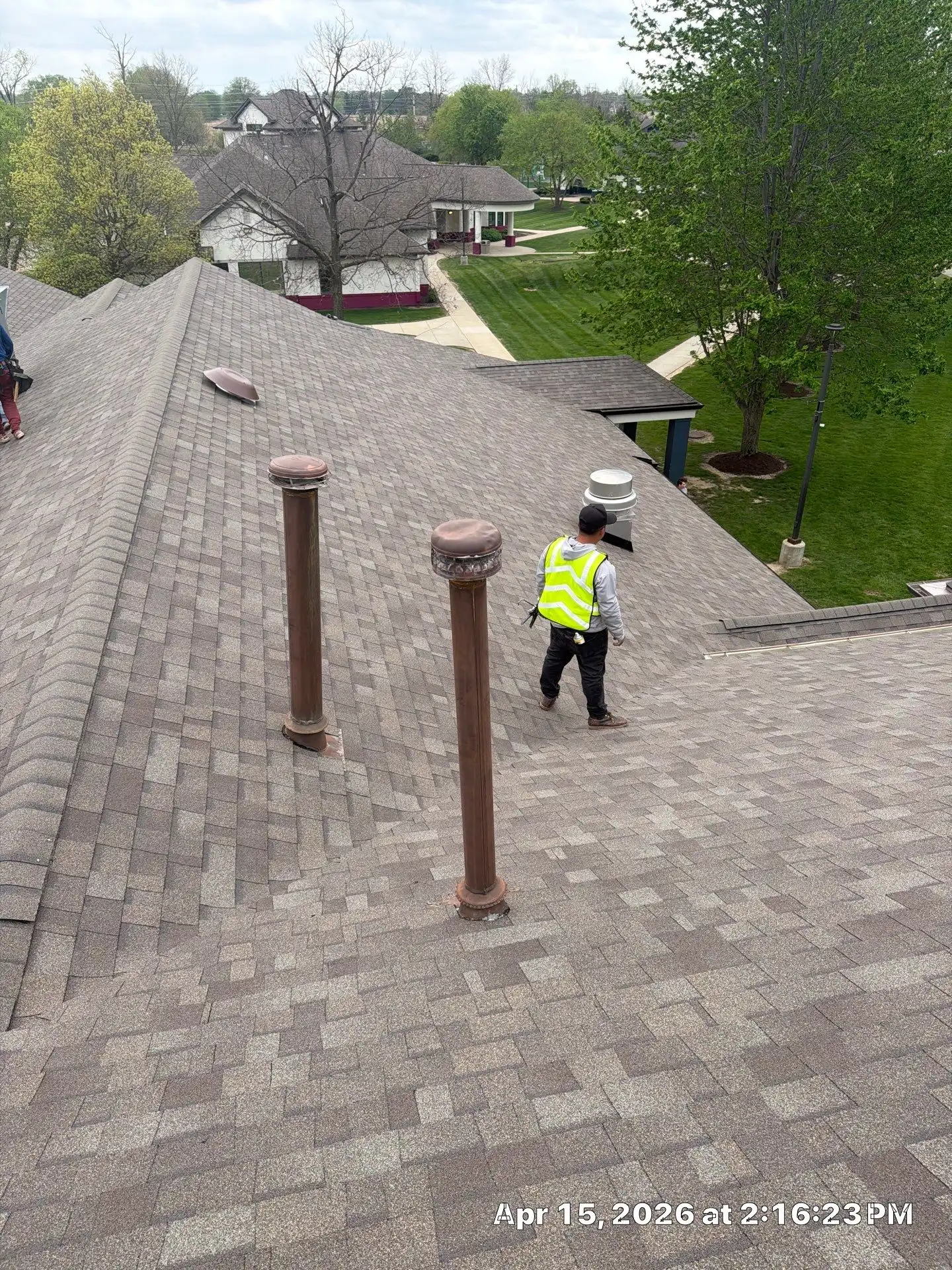
The Warehouse That Waited Too Long
A logistics company off the interstate in Trader's Point owned a 60,000 square foot EPDM roof installed in 2008. They had never paid for an inspection. When a January thaw hit after a heavy snow, water poured through a light fixture above the packing line and shorted three conveyors. Production stopped for two days.
When we got up there, the membrane was still serviceable, but the perimeter flashing had pulled away in six spots and a rooftop unit curb had cracked sealant that let water track twenty feet under the membrane. A maintenance program at roughly $1,800 per year for that size building would have caught the flashing during the fall walk. Instead, the owner paid for emergency tarping, interior water cleanup, equipment replacement, and roughly $14,000 in targeted membrane repair. He signed a three year maintenance agreement the day we finished. You can read more about how we approach commercial roof inspections if you want the detail on what a walk actually involves.
What stuck with the owner was not the repair bill. It was the lost production days. His operations manager calculated downtime at close to $40,000 once you counted overtime to catch up on shipments and the freight penalties from missed delivery windows. That number changed how he thought about roof spending entirely. He went from viewing maintenance as overhead to viewing it as insurance against operational risk, which is exactly the frame that makes these programs pay for themselves.
The Medical Office That Did It Right
Compare that to a medical office building owner near the hospital district. She inherited a 12 year old modified bitumen roof when she bought the property in 2019. The first thing she did was call us for an assessment. We put her on a semi annual program: spring inspection, fall inspection, drain clearing, minor seam and flashing repairs included, written report with photos after each visit.
Her annual cost has averaged around $2,400 for a 22,000 square foot roof. Over four years, that is under $10,000 total. In that same window, we have patched eleven small issues that would have become leaks, cleared a clogged scupper twice, and replaced cracked pitch pans around her HVAC stands. She has had zero interior water events. Her tenants, two dental practices and an imaging center, have never closed for water damage. That is what a working program looks like.
She also uses our annual report when she renews tenant leases. Showing prospective tenants a documented roof history with photos and a forecast removes one of the biggest unknowns for a medical practice considering a long lease. One of her dental tenants told her directly that the roof documentation was a factor in signing a seven year extension.
What a Real Program Includes
When Trader's Point Commercial Roofing writes a maintenance agreement in Trader's Point, the scope is specific. We do not sell vague "check ups." A standard program covers:
- Two scheduled inspections per year with photo documentation
- Drain, scupper, and gutter clearing
- Minor seam, flashing, and pitch pan repairs included up to a set labor allowance
- Written condition report with prioritized recommendations
- Priority response for active leaks between visits
- Annual budget forecast for capital planning
That last item matters more than people realize. Owners who get an honest forecast can plan for a coating project or partial replacement two or three years ahead instead of scrambling. If your roof is genuinely past saving, we will tell you directly and walk you through commercial roof replacement options instead of selling you maintenance on a system that has already failed.
When Maintenance Stops Making Sense
One last story. A Trader's Point office park owner asked us about a program for a 30 year old built up roof with three layers of patches. We inspected it, sat down with him, and recommended he skip the maintenance plan. The roof needed replacement, not babysitting. He appreciated the honesty and budgeted for a TPO recover the following year. Maintenance is powerful, but only when there is something worth maintaining.
The Restaurant That Learned About Grease
A Trader's Point restaurant owner called us thinking he had a roof leak above his kitchen. He did, sort of. The membrane around his kitchen exhaust fan had been chemically degraded by years of unfiltered grease vapor. The TPO had turned brittle and was cracking in a two foot ring around the curb. A standard maintenance plan would have flagged this at the first inspection because we specifically check around exhaust units, especially on restaurants. Instead, he was looking at $6,800 to rebuild the curb, replace the membrane section, and install a grease containment device. We added quarterly visits to his contract because of the kitchen exposure, and his annual cost runs about $2,100 for a 7,500 square foot building.
The School That Caught a Storm
A private school in Trader's Point had been on our maintenance program for two years when a June hailstorm rolled through. Because we had baseline photos from the prior inspection, the insurance adjuster could see exactly what changed. The claim was approved without argument and the school got a full coating restoration paid for. Without those baseline records, hail claims often get reduced or denied. If you are dealing with storm aftermath, our notes on commercial roof insurance claims walk through how documentation drives outcomes.
The school's business manager said the documented baseline was worth several years of program fees on that single claim alone. That is the quiet value of consistent records. You do not need them until you really need them, and by then it is too late to create them.
What Programs Actually Cost in Trader's Point
Pricing depends on size, roof system, age, and access. Here is the realistic range we quote across Trader's Point for standard commercial buildings:
Buildings with heavy rooftop equipment, tall parapets, or limited access typically land at the higher end of these ranges. A property with a single ladder access point and twenty HVAC units takes longer to inspect properly than one with a hatch and three units, and the pricing reflects that reality.